AI IS NOT MAGIC. NOR IS IT EVIL.
Artificial intelligence is the most overhyped and simultaneously most misunderstood technology in decades. Everyone has an opinion. Very few people have clear answers. We're going to try to give you some.
This page covers what AI genuinely does well, where it falls short, the real risks you should understand, and how to think about it clearly — without hype in either direction.
We've been in technology for 25+ years. We watched dot-coms crash, social media promise connection and deliver addiction, and blockchain promise everything while mostly enabling fraud. We approach AI with the same clear eyes: acknowledge what's real, call out what isn't, help you make smart decisions.
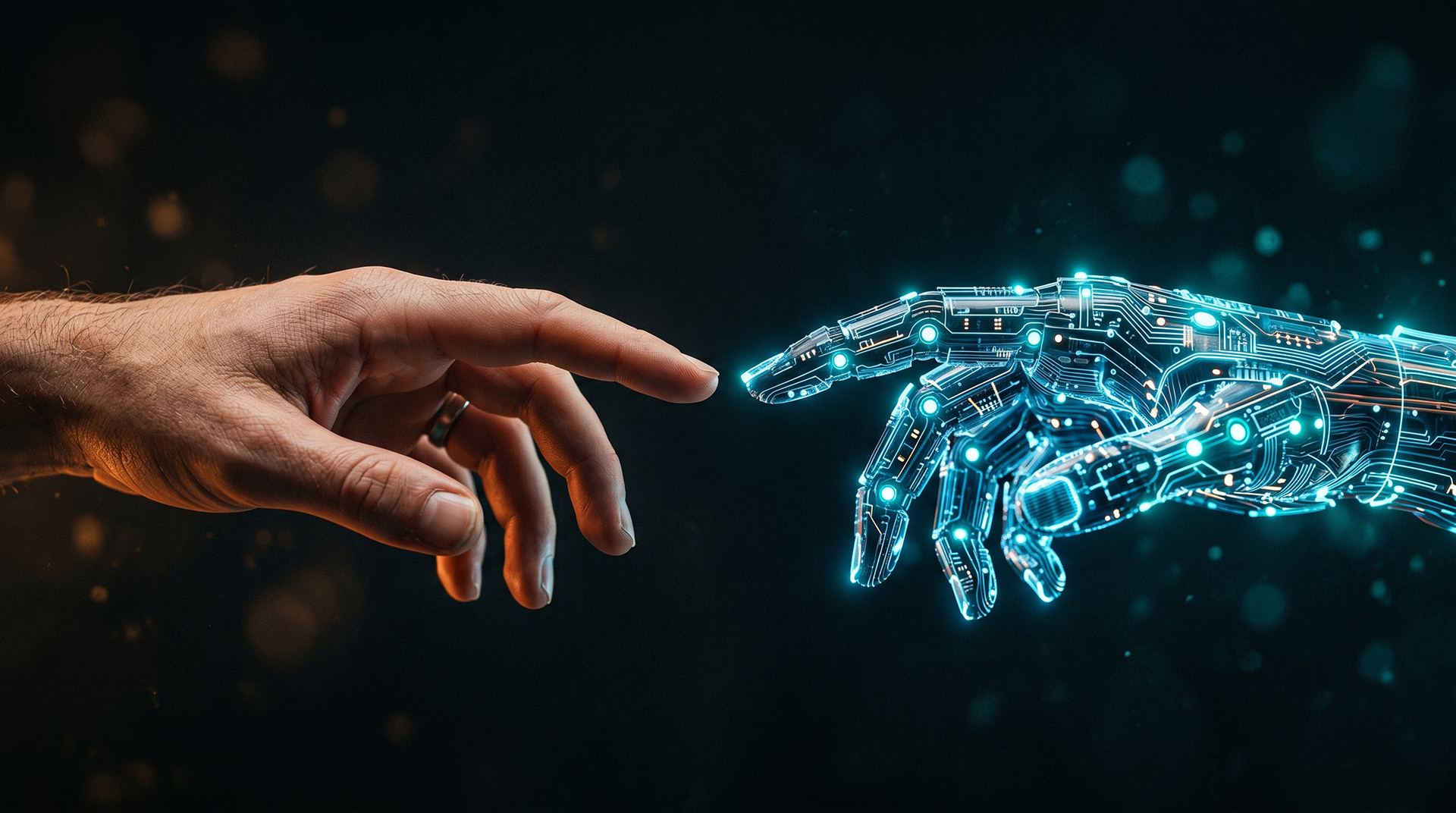
WHERE AI DELIVERS AND WHERE IT DOESN'T
The truth about AI isn't found at either extreme. The reality is more nuanced — and more useful — than either the hype or the fear suggests.
✓ Where AI Genuinely Helps
- Automating repetitive, well-defined tasks at scale
- Pattern recognition in large datasets — medical imaging, fraud detection
- Drafting and editing written content as a starting point
- Code assistance and debugging for experienced developers
- Translation and language accessibility tools
- Customer service triage for common, predictable queries
- Search and information retrieval improvements
- Accessibility tools for people with disabilities
✗ Where AI Falls Short
- Tasks requiring genuine understanding, not pattern matching
- Factual accuracy — AI confidently invents false information
- Legal, medical, and financial advice without expert review
- Creative originality — it recombines, it doesn't originate
- Ethical judgment in complex, contextual situations
- Replacing experienced human judgment in high-stakes decisions
- Anything requiring accountability — AI cannot be held responsible
- Long-term strategic thinking requiring real-world grounding
WHAT YOU NEED TO UNDERSTAND
Deepfakes & Synthetic Media
AI can now generate photorealistic video and audio of real people saying things they never said. The technology is cheap, accessible, and improving rapidly. We are entering an era where visual and audio evidence is no longer inherently trustworthy.
This has real implications for fraud, extortion, political manipulation, and personal reputation attacks. Businesses should already be establishing verification protocols for authorizations made via phone or video.
AI-Powered Cyberattacks
AI dramatically lowers the skill barrier for sophisticated cyberattacks. Phishing emails that used to be identifiable by poor grammar are now indistinguishable from legitimate messages. AI can generate custom malware, identify vulnerabilities at scale, and conduct social engineering at previously impossible volume.
This is not hypothetical — it is actively happening. The threat landscape has shifted significantly in the last two years.
AI Hallucinations & False Confidence
Large language models don't know things — they predict statistically likely text. When they don't know an answer, they often generate a plausible-sounding wrong one with complete confidence. This is called "hallucination."
People have cited non-existent legal cases, fake research papers, and invented statistics — all generated by AI presenting false information as fact. Verify everything AI tells you that matters.
Data Privacy & AI Training
When you use free AI tools, your inputs — your questions, documents, business data — may be used to train future models. Many businesses are inadvertently feeding confidential information into AI systems without understanding where it goes.
Employees using AI tools for work tasks represent a significant, often unmanaged data leakage risk for businesses of all sizes.
AI & Employment
The honest answer: AI will eliminate some jobs, transform others, and create new ones — exactly as every major technology shift has done. The specifics are genuinely uncertain. Anyone claiming precise predictions is speculating.
What is clear: people who understand how to work effectively with AI tools will have a significant advantage over those who don't.
AI Regulation & Legal Liability
The legal framework around AI is genuinely unsettled. Who is liable when AI makes a harmful decision? Who owns AI-generated content? Courts and legislatures worldwide are actively working through these questions with no clear consensus yet.
Businesses using AI in customer-facing or decision-making contexts face real legal exposure that most haven't fully assessed.
AI PITFALLS PEOPLE KEEP FALLING INTO
Trusting AI Output Without Verification
AI sounds authoritative but isn't always right. People make significant decisions based on AI-generated information they never checked. Always verify anything consequential through a primary source.
Entering Sensitive Data Into Free Tools
Pasting confidential business data or client information into free AI tools is a data security risk most users don't consider. Read the terms of service before using any AI tool for work.
Assuming AI Understands Context
AI doesn't understand your situation — it matches patterns. The same tool that drafts a solid email can completely misunderstand nuanced business context. It has no awareness of what it doesn't know about your circumstances.
Replacing Expertise With AI Output
AI can help draft a contract. That contract still needs a real lawyer. Using AI output as a substitute for professional expertise in legal, medical, or financial matters is a serious risk.
Ignoring AI-Powered Threats
Phishing, voice phishing, and social engineering attacks powered by AI are dramatically more convincing than two years ago. Your people need updated training — the old warning signs no longer apply.
Deploying AI Without a Policy
Companies rolling out AI tools without clear guidelines on what's permitted create compliance and liability exposure that leadership often discovers too late.
25+ YEARS OF TECH CYCLES. A FEW OBSERVATIONS.
We've been in technology since 1996. We watched the internet get sold as a force that would change everything — and it did, just not in the ways most people predicted. We watched dot-coms burn billions, social media rewire human behavior, and mobile computing reshape daily life entirely.
AI is real. It is a significant technological shift. But the pattern we've seen repeatedly is this: new technologies are simultaneously more impactful than skeptics believe and more problematic than boosters claim.
The most dangerous position on any new technology is certainty — whether that certainty is excitement or fear. The useful position is curiosity combined with critical thinking.
What we tell our clients: use AI tools where they genuinely help your work. Understand their limitations. Protect your data. Train your people to recognize AI-powered threats. And don't make critical decisions based on AI output alone.
We help businesses and individuals navigate AI practically — developing usage policies, assessing AI-related security risks, evaluating specific tools, and training staff to work with AI effectively and safely.
Talk to Us About AILET'S HAVE AN HONEST CONVERSATION.
Whether you want to use AI more effectively, protect your business from AI-powered threats, or just understand what's real and what's hype — we're happy to talk it through.
(661) 299-9191